
Stucco Cracks in Riverside Homes: What's Normal, What's Not, and How We Fix Them
By Tim Nguyen, CM Painters9 min read
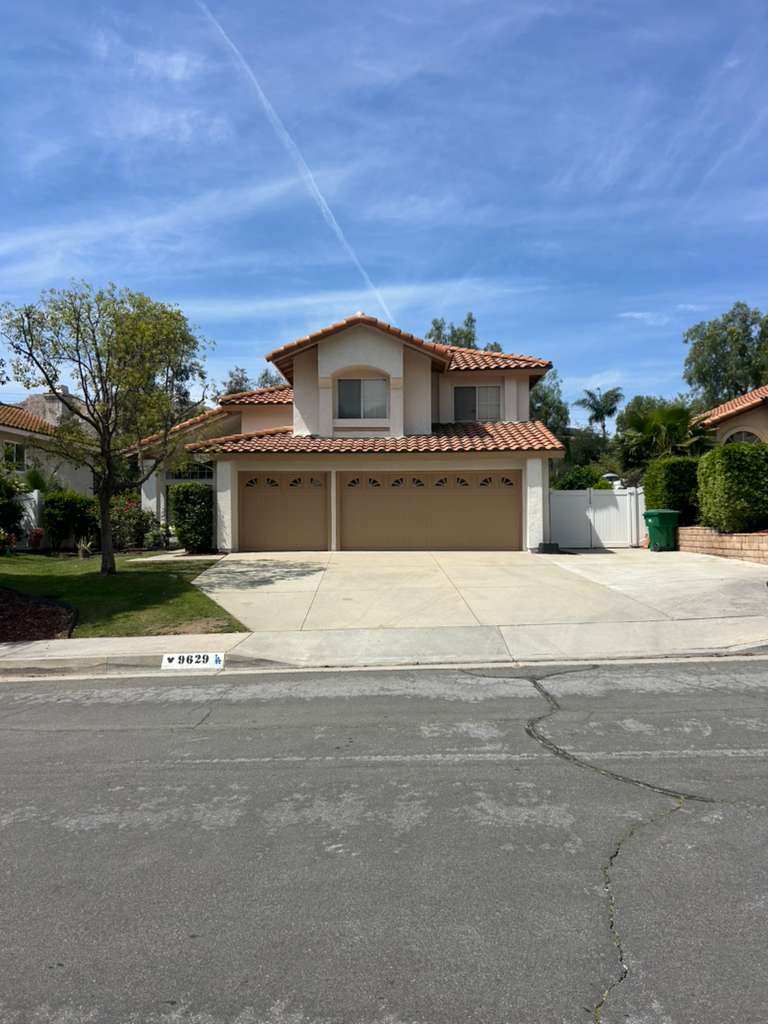
Hairline stucco cracks under 1/16 inch are normal in Riverside homes, and we seal them as part of routine prep before any paint goes on. Cracks wider than 1/8 inch, stair-step cracks that follow a diagonal path, and cracks where one side sits higher than the other are not normal. Those need an assessment before you spend money on paint, because paint won't fix them and may hide a problem that keeps getting worse.
Nearly every house we walk in Riverside, Corona, Eastvale, and Menifee is stucco, and nearly every one has cracks. Here's how to sort the cosmetic ones from the serious ones, and how we repair a cracked wall so it doesn't ghost back through the new paint.
Why does stucco crack in Riverside and Corona homes?
Stucco cracks in Riverside and Corona homes because it's a rigid cement skin stretched over a house that moves. The ground underneath shifts with moisture, the framing shrinks as it dries, and the wall itself expands and contracts with daily temperature swings of 30 to 40 degrees. Stucco has almost no flexibility, so when something moves, it relieves the stress by cracking.
Soil movement. Large parts of the Inland Empire sit on expansive clay soils. Clay swells when it gets wet and shrinks when it dries out. A winter with 10 inches of rain followed by a summer of 100°F days can raise and lower the soil under a slab enough to flex the foundation slightly. Every flex shows up first at the weak points in the stucco: the corners of windows and doors, the top of the foundation line, and the joint where a garage meets the main house.
Framing shrinkage. New homes in Eastvale, Menifee, and South Corona are framed with lumber that still holds moisture. Over the first 1 to 3 years that wood dries and shrinks, and the stucco bonded to it takes the strain.
Thermal cycling. A south- or west-facing stucco wall in Riverside can reach 130°F or more on a July afternoon and drop below 70°F overnight, 150-plus times a year. Dark colors make it worse by absorbing more heat, and large unbroken walls with no control joints crack first.
Original application. Stucco mixed too wet or cured too fast in summer heat develops “map cracking,” a random web of shallow cracks across the whole surface. It's cosmetic, but it changes how we coat the wall.
Which stucco cracks are cosmetic and which are structural?
Cosmetic stucco cracks are thin (under 1/16 inch), shallow, stable, and lie flat, with both sides of the crack at the same height. Structural warning signs are cracks wider than 1/8 inch, cracks that keep growing, stair-step or long diagonal cracks running from window and door corners, and any crack where one side has shifted outward or downward relative to the other.
Here's the reference we use on walkthroughs in Riverside and Corona:
| Crack type | What it usually means | What we do |
|---|---|---|
| Hairline, under 1/16" | Normal shrinkage or thermal movement | Clean, fill with elastomeric crack filler, paint |
| 1/16" to 1/8" | Moderate movement, usually still cosmetic | Open (V-cut), patch, texture-match, prime, paint |
| Over 1/8" | Significant movement — needs a closer look | Assess first; patch only if stable |
| Stair-step or diagonal from corners | Possible foundation settlement | Recommend a foundation or structural evaluation |
| Displaced (one side higher or bulging) | Active movement or failing lath behind the stucco | No paint until the cause is fixed |
A simple test you can run yourself: slide a credit card into the crack. If it won't go in, it's hairline. If the card slides in easily, you're past 1/32 inch and climbing. A US nickel is about 1/16 inch thick, so if one fits edge-on, the crack is at least 1/16 inch. If two stacked nickels fit, you're past 1/8 inch and it's worth a second opinion.
We're painters, and we'll be straight about that. When we see a stair-step crack running from a window corner to the foundation, doors that have started sticking, or a crack that's grown since the homeowner first noticed it, we stop and tell you to call a structural engineer or foundation contractor before we quote paint. An evaluation in Riverside County typically runs $300 to $600. That's cheap compared with painting a $7,000 exterior over a problem that splits it open again in 18 months.
How are hairline stucco cracks repaired before painting?
Hairline stucco cracks are repaired by cleaning out the crack, filling it with a flexible, paintable elastomeric crack filler, and blending the surface so the repair matches the surrounding texture. Once the filler cures, usually in 24 to 48 hours, the wall is primed where needed and painted with the rest of the house.
On a typical Riverside exterior, here's the sequence:
- Wash. The whole house gets pressure washed at a controlled pressure (roughly 1,500 to 2,500 PSI on stucco) to remove dirt, chalk, and loose material from inside the cracks. Then it dries for at least 24 hours.
- Open cracks wider than hairline. Anything from 1/16 to 1/8 inch gets lightly V-cut so the filler has a clean edge to grab instead of bridging a thin skin that pops later.
- Fill with the right product. We choose among three materials depending on width and location, covered below.
- Texture. While the patch is workable, we match the surrounding texture so the repair doesn't show as a smooth stripe across a textured wall.
- Cure and prime. Cement patches get a full cure and a masonry primer; acrylic and elastomeric fillers get spot-primed once they're dry.
Caulk vs. patching compound vs. re-stucco. These are three different tools. Elastomeric caulk or crack filler stays flexible, so it's right for hairline cracks and joints at trim, windows, and doors. Stucco patching compound has body and takes texture, so it's right for cracks from 1/16 to about 1/4 inch and small chips. Re-stucco, cutting back to the lath and replacing the scratch, brown, and finish coats, is for stucco that sounds hollow when tapped or has crumbled from water. Smooth caulk smeared over a textured wall is the most common shortcut we see, and it shows through paint like a scar. We cover our full surface prep approach in our Riverside paint prep guide.
What is elastomeric paint and does my stucco need it?
Elastomeric paint is a thick, rubbery acrylic coating that dries to roughly 10 to 20 mils, about 5 to 10 times thicker than a standard exterior paint at 1.5 to 2 mils. It can stretch to bridge hairline cracks and flex as the wall moves. Your stucco likely benefits from it if it has widespread map cracking or repeatedly re-cracks after repaints, but most stucco homes in good condition don't need it.
Elastomeric isn't a free upgrade. Here are the tradeoffs we walk you through before we spec it on a Riverside or Corona house:
- Vapor permeability. Stucco needs to breathe. Elastomeric coatings are far less permeable than standard acrylics, so if water gets behind the wall through a roof leak, a bad window flashing, or a sprinkler hitting the wall daily, it can get trapped and push the coating off in blisters.
- Cost. The product runs roughly $70 to $100 per gallon and covers 50 to 100 square feet per gallon at full thickness, versus 250 to 400 square feet for standard paint. On a 2,000-square-foot single-story home, that typically adds $1,500 to $3,500 to the job in material and labor.
- Recoating. Once a wall is elastomeric, it's elastomeric. Future repaints have to use compatible products, and switching back is a much bigger prep job.
- Look. It softens fine texture slightly, comes in flat to low sheens, and picks up dirt more readily in year one.
- Application temperature. It needs dry weather and surface temperatures roughly between 50°F and 90°F, which rules out many summer afternoons on west walls in Riverside.
Our usual recommendation: a quality 100% acrylic system on stucco that's in good shape, and elastomeric on the elevations or homes where cracking keeps coming back. That's part of how we scope every exterior painting project.
Can you paint over cracked stucco without repairing it?
You can physically paint over cracked stucco without repairing it, but the cracks will show through within months and keep letting water into the wall. Standard paint at 1.5 to 2 mils is too thin to bridge even a hairline crack once the wall moves again, so the crack reappears in the new finish, often more visibly because the fresh color highlights it.
The bigger issue is water. An open crack lets rain and sprinkler spray reach the paper and lath behind the stucco. Over a few winters that moisture can rot sheathing, rust the lath, and blister the paint around the crack.
How much does stucco repair add to a painting job?
On most Riverside and Corona homes, routine crack filling adds nothing extra because it's already included in a proper prep scope. Moderate patching on a home with 20 to 50 linear feet of cracks typically adds $300 to $1,200, and section re-stucco runs about $8 to $15 per square foot, often with a $500 to $1,000 minimum.
Typical ranges on a 1,800- to 2,500-square-foot home:
- Hairline crack sealing: included in prep on every exterior we quote.
- Opening and patching cracks from 1/16 to 1/4 inch: about $5 to $15 per linear foot, depending on texture and access.
- Chips, holes, and damaged corners: $75 to $250 per area.
- Re-stucco of a delaminated or water-damaged section: $8 to $15 per square foot plus cure time before paint.
- Upgrading to elastomeric: roughly $1,500 to $3,500 on a single-story home.
We list stucco repair as its own line on the written estimate, and we tap, probe, and measure during the walkthrough so the number holds.
How do you match the texture of patched stucco?
You match patched stucco texture by identifying the original finish, whether knockdown, sand or float, or dash, and reproducing it with the same tool and technique while the patch material is still workable. A good match blends in completely once the wall is painted; a poor one shows up as a smooth or lumpy patch in raking afternoon light.
The three textures we see most across Riverside County:
- Sand or float finish. A fine, uniform grain common on 1980s and 1990s homes in Riverside and Moreno Valley. We float the patch with a sponge or rubber float in small circles, matching the grain size by adjusting the aggregate in the mix.
- Knockdown and skip trowel. Flattened splatter or trowel marks, very common on newer Corona, Eastvale, and Temecula tracts. We apply the patch, let it set for 10 to 20 minutes, and knock it down with a trowel at the same pressure and angle as the original.
- Dash. A coarse, splattered texture on many older Riverside homes. We spray or flick material with a hopper gun or brush, building it in 2 or 3 light passes rather than one heavy one.
Two things make or break the match. The patch has to cure before paint, or it dries a different shade and sheen. And the whole elevation gets painted, not just the patch, because spot paint never blends with years of faded color around it. If you're repairing interior walls too, our drywall repair crew uses the same texture-matching approach indoors.
Want to know if your stucco cracks are normal?
We walk every Riverside and Corona home before we quote. We'll measure your cracks, tell you which ones are cosmetic and which ones need a specialist, and put every repair on the written estimate before a single wall gets painted.
Call (858) 293-7740 for a free same-day estimate, or request your quote online →
What else do Riverside homeowners ask about this?
- Is it normal for a new house in Riverside to have stucco cracks?
- Yes. Most new stucco homes in Riverside, Corona, and Menifee show hairline cracks within the first 1 to 3 years as the framing dries out and the slab settles. Cracks under 1/16 inch that aren't growing are considered normal shrinkage. If your home is still under the builder's warranty, photograph them with a coin for scale and report anything wider than 1/8 inch.
- How long after stucco repair can you paint?
- It depends on the product. Acrylic patching compounds and elastomeric crack fillers are usually paintable in 24 to 48 hours at 70°F. A cement-based stucco patch needs about 7 days to cure before acrylic paint, and new full-thickness stucco traditionally gets 28 days. Painting too early traps moisture and alkali in the patch and causes blistering and discoloration.
- Will painting my stucco stop it from cracking?
- No coating stops stucco from moving. Standard acrylic paint at 1.5 to 2 mils will crack right along with the wall. An elastomeric coating at 10 to 20 mils can stretch and bridge hairline movement for years, but it won't hold back a crack caused by active foundation settlement.
- How can I tell if a stucco crack is getting bigger?
- Mark both ends of the crack with a pencil line and write the date next to it, then measure the width at its widest point with a crack gauge or a set of feeler gauges. Check again in 3 and 6 months. If the crack has grown past your marks or widened by more than 1/32 inch, have it looked at before you repaint.