
What to Do Before the Painters Arrive: A Homeowner's Checklist
By Tim Nguyen, CM Painters9 min read
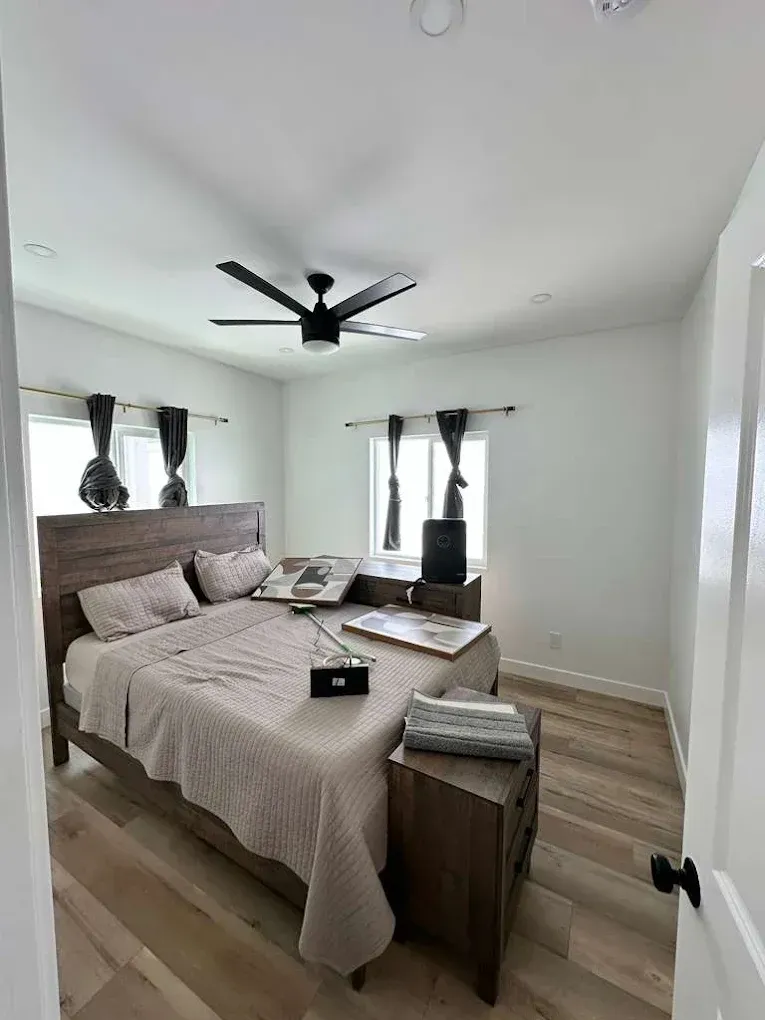
Before the painters arrive, your job is short: clear personal items and wall decor, secure your pets, unlock or share access to gates and rooms, shut off sprinklers for exterior work, and lock in your colors and sheens. We handle everything else — moving and covering heavy furniture, masking, floor protection, and all of the surface prep. Most homeowners can finish their part in 2 to 4 hours over the weekend before we start.
When a homeowner has done the short list below, we're masking by 8:15 on day one. When they haven't, we lose the first two hours to a locked gate, boxing up picture frames, or an undecided trim color — and that can push your finish date back a full day.
This post is about your prep. If you want to know what we do to the walls themselves — washing, scraping, patching, caulking, priming, and masking — that's covered in what proper paint prep actually looks like. Here, I'm walking you through the homeowner side of a project in Riverside, Corona, or anywhere else in the Inland Empire, question by question.
Do I need to move my furniture before painters arrive?
No, you don't need to move heavy furniture before painters arrive — we move it to the center of each room and wrap it in plastic as part of the job. What you should do is clear the small, loose, and breakable things off and around that furniture, because those are the items most likely to get knocked over when a couch slides 4 feet.
We'll move the dresser, but not the 30 perfume bottles on top of it. Clear tabletops, bookshelves, nightstands, and lamps. Anything you'd hate to see chipped goes in a box in a room we're not painting.
Flag a few pieces for us at the walkthrough: glass display cabinets, antiques, aquariums, and oversized items like a 9-foot sectional or a gun safe. We need about 3 feet of clearance along each wall, so in a packed room we'll stage overflow in a hallway or garage — tell us which spaces are off-limits.
What should I take off the walls before an interior paint job?
Take everything personal off the walls before an interior paint job: framed art, photos, mirrors, shelving decor, clocks, and anything hanging from a hook or nail. Leave the nails and anchors in place unless you want them gone — tell us which holes you'd like patched and which hooks you plan to reuse.
This is the biggest time-saver you can give a crew. A typical Riverside living room has 8 to 15 hung items, and a hallway gallery wall can have 30. Taking those down and tracking where each one goes costs us about an hour per room — and you know which frame has the cracked glass.
Electronics need special attention. Wall-mounted TVs are the most common question we get. If one hangs on a wall we're painting, have it dismounted or tell us at the walkthrough — we won't pull a mount wired through the wall without your sign-off. Unplug and move computers, floor routers, and speakers on stands. Thermostats, doorbells, and cameras stay put; we mask around them.
Closets count as rooms. If your quote includes closet interiors, empty them completely — clothes, shoe racks, and the boxes on the top shelf. A walk-in closet that still holds 200 hangers can't be painted, and we won't paint around your wardrobe. If closets aren't in the scope, just make sure the doors can open fully so we can paint the door faces and jambs.
We'll remove standard blinds and curtain rods, but mention custom drapery and motorized shades first. Clear bathroom counters and any kitchen counter along a painted wall. If your interior repaint includes cabinets, empty those too.
What do painters need access to on an exterior job?
On an exterior job, painters need unlocked access to every side of the house: side gates, backyard, patio, the garage exterior, and at least one water spigot and one outdoor electrical outlet. If any gate has a lock, code, or keypad, send us the code or leave it unlocked for the days we're scheduled.
Most Corona and Riverside homes built after 1990 have padlocked side gates, and plenty of Eastvale and Menifee tracts add a community gate. Text us both codes 1 to 2 days before we start — a crew standing at a locked gate is the most avoidable delay in this business.
Shut off your sprinklers. Turn off automatic irrigation 24 to 48 hours before we pressure wash, and keep it off until the final coat has had at least 24 hours to cure. A 5 a.m. sprinkler cycle against fresh stucco paint leaves water spots and mineral deposits and can lift uncured paint at the base of the wall.
Move vehicles out of the driveway. Park on the street or in the garage during exterior work. A light breeze can carry fine overspray, and we need 25 to 30 feet of open driveway for ladders and the sprayer. If you park in the garage, tell us so we paint the garage door last.
Clear the perimeter. Pull patio furniture, grills, planters, trash cans, garden hoses, and kids' toys about 3 feet away from the house, and take down hanging baskets. If you can, trim shrubs back 6 to 12 inches from the walls. Our full exterior painting scope covers the masking and plant protection from there.
What should I do with pets during a painting project?
Keep pets confined to a room or area we're not working in, or board them for the day if they're anxious around strangers. Our crew opens doors and gates all day, so a dog that normally stays in the backyard needs a different plan while we're there.
For an interior job, pick one room we won't touch until the last day and set the pet up there with water, a bed, and a sign on the closed door. Cats are the bigger risk — they hide in drop cloths and walk through wet trim paint. Move litter boxes out of rooms getting paint.
For an exterior job, the backyard is our workspace, so dogs need to stay inside or off-site from about 8 a.m. to 4 p.m., because side gates open dozens of times a day. On a Norco or Jurupa Valley property with horses or chickens, show us where the animals are so we keep spray and wash water away. Move birds and fish tanks away from any room we're painting, even with low-VOC products.
Do I need to be home while my house is being painted?
No, you don't need to be home while your house is being painted, as long as we have access and a way to reach you. Most of our Riverside and Corona customers are at work for part or all of the job; we just need you present for the start-of-job walkthrough and the final walkthrough.
The opening walkthrough takes about 15 minutes: we confirm colors room by room and agree on a daily schedule. The final walkthrough takes 20 to 30 minutes, and that's where you point out any touch-ups. In between, you're free to come and go.
If you'll be gone, set up a lockbox or garage code and keep your phone on — a 30-second text answer can save us an hour of guessing. If you work from home, tell us which room is your office so we schedule it first or last.
What decisions should I make before the crew shows up?
Make your final color choices, sheen choices, and scope decisions before the crew shows up. Every wall, ceiling, trim surface, and door should have a confirmed color and sheen by at least 3 days before the start date, so paint can be ordered and tinted in time.
Color. Test samples on the actual wall, not on a chip under kitchen lighting. Look at each sample in the morning, at midday, and around 5 p.m. — Riverside afternoon sun shifts warm grays toward beige and pushes whites toward yellow on west-facing walls. A sample swatch of about 2 feet by 2 feet gives you a far better read than a 2-inch chip.
Sheen. The standard pattern we recommend is flat or matte on ceilings, eggshell or matte on living spaces, satin in kitchens and bathrooms, and semi-gloss on trim and doors. Whatever you pick, decide before the paint is tinted — sheen can't be changed in the can.
Scope. Settle the extras now: closets, the garage interior, the wall with the old water stain. Changing a color on day three, after the first coat is up, adds labor and material. If you have an HOA, get exterior colors approved before we schedule — Temecula and Murrieta HOAs often take 2 to 6 weeks to review a submittal.
Staging area. Choose one spot where the crew can keep paint, tools, ladders, and drop cloths overnight. A garage bay is ideal; a covered patio or a side yard works too. It needs to be roughly 8 by 10 feet, out of the sun, and away from where kids and pets roam. Paint stored in a 110°F Riverside driveway in July doesn't perform the way it should, so shade matters.
The homeowner checklist
Interior work:
- Remove framed art, mirrors, clocks, and wall decor from every room in the scope
- Clear tabletops, shelves, nightstands, and counters along painted walls
- Pack fragile items and collectibles into a room we're not painting
- Unplug and move floor electronics; decide whether wall-mounted TVs come down
- Empty closets that are included in the scope
- Clear bathroom counters and any cabinets we're refinishing
- Set aside one closed room for pets
- Tell us which nail holes to patch and which hooks to keep
Exterior work:
- Send gate codes and side-gate combinations 1 to 2 days ahead
- Turn off sprinklers 24 to 48 hours before the wash
- Move vehicles out of the driveway for the length of the job
- Pull patio furniture, grills, planters, and hoses 3 feet from the walls
- Take down hanging plants and wall-mounted decor
- Keep dogs inside or off-site during work hours
- Confirm HOA color approval, if your community requires it
Both:
- Finalize every color and sheen 3 or more days before the start
- Pick a shaded staging area of about 8 by 10 feet
- Arrange entry if you won't be home, and keep your phone on
- Block 15 minutes for the opening walkthrough and 30 for the final
What does the painting crew handle that I don't have to?
The painting crew handles everything between your checklist and the finished walls: moving and wrapping heavy furniture, covering floors, masking, removing switch plates and outlet covers, all surface prep, priming, painting, and daily cleanup. You don't need to buy supplies, clean walls, tape anything, or move anything heavier than a box.
Inside, that means drop cloths, furniture centered and wrapped, light fixtures bagged, and hardware removed rather than taped around. Outside, it means pressure washing, scraping, stucco crack repair, caulking, and plant protection. Around 4 p.m. each day we sweep up and leave the house livable for the night.
On a typical project, that split is 2 to 4 hours of your time against 40 to 120 crew hours of ours. Your part is small, but it's the part that keeps a Corona interior or a Riverside exterior on schedule.
Ready to get your project on the calendar?
We walk every Riverside and Corona home before quoting, and at that walkthrough we'll tell you exactly what to clear, which gates we need, and when to shut off your sprinklers — specific to your house.
Call (858) 293-7740 for a free same-day estimate, or request your quote online →
What else do Riverside homeowners ask about this?
- How far in advance should I start getting ready for painters?
- Start about 7 days out. That gives you a weekend to clear decor and closets, time to confirm your final colors and sheens, and room to schedule a sprinkler shutoff 24 to 48 hours before an exterior wash. Most homeowners need 2 to 4 hours of actual work for a typical interior job.
- Should I wash my walls before the painters come?
- No. Cleaning, degreasing, and pressure washing are part of our prep, and we do them right before paint so nothing settles back on the surface. The only exception is heavy personal clutter or anything you'd rather we not touch, like a collection on a shelf — pack that away yourself.
- Can I stay in my house while it's being painted?
- Yes. On most Riverside and Corona jobs homeowners stay home the whole time. We use low-VOC and zero-VOC paints indoors, work one or two rooms at a time, and keep a clear path to your kitchen and at least one bathroom every day.
- Do I need to tip or provide anything for the painting crew?
- Tipping is never expected, and you don't need to provide food or supplies. The only things we ask for are access to an exterior water spigot, one standard electrical outlet, and a bathroom the crew can use during the workday — usually 7 to 8 hours a day.