
How to Know When Your House Needs Repainting (Riverside Homeowner's Guide)
By Tim Nguyen, CM Painters8 min read
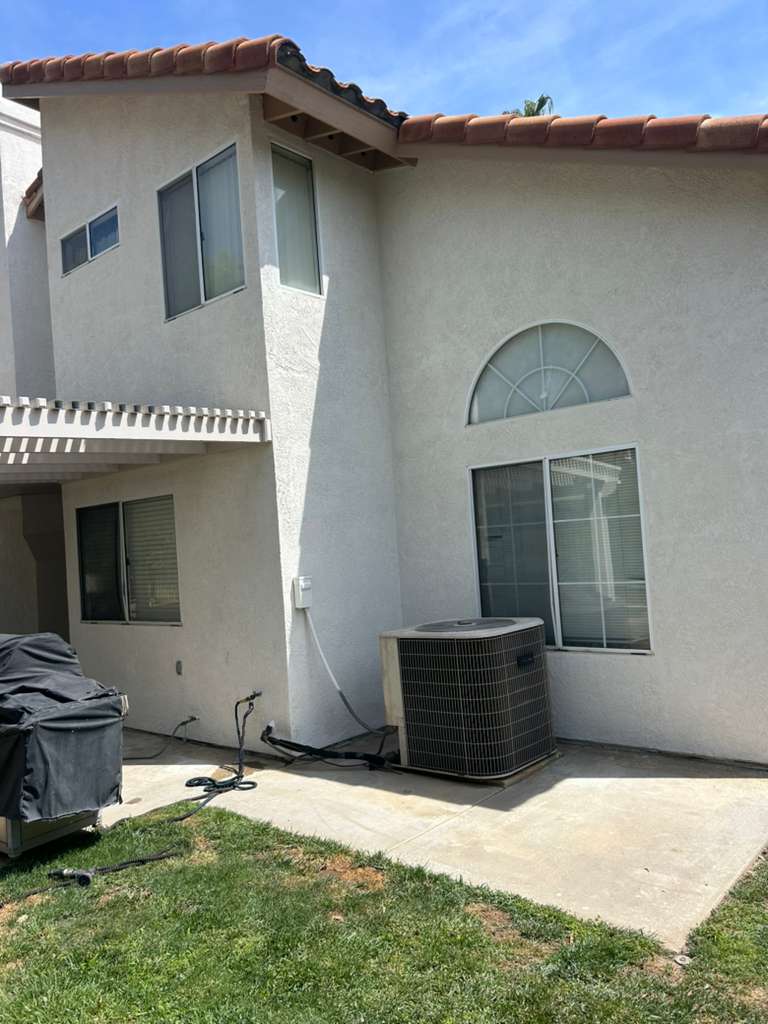
Most Riverside-area homes need an exterior repaint every 7–10 years, and the south- and west-facing walls usually need it sooner — often by year 5 or 6. The signs to look for are chalking, fading, cracking, peeling, bare substrate showing through, failed caulk at trim and windows, and mildew in shaded areas. If you see two or more of those on the same wall, that wall is due.
The national rule of thumb you'll read online is 10–15 years between exterior repaints. That number assumes a mild climate. In Riverside and Corona, you're dealing with 280-plus days of sun a year, summer highs that run past 100°F for weeks at a time, and a daily temperature swing of 30°F or more. That combination ages paint faster than almost anywhere else in the country. Below are the specific signs I look for when I walk a house, what each one means, and how long you have once you spot it.
How often should a house be repainted in Riverside, CA?
A house in Riverside, CA should be repainted every 7–10 years on average, with stucco on the shaded side lasting closer to 10–12 years and sun-exposed elevations lasting closer to 5–7. Wood trim, fascia, and doors usually need attention every 4–6 years because they take the most direct UV and move the most with heat.
Those ranges assume the last job was done right: a full wash, real repairs, primer where it was needed, and two coats of a quality exterior acrylic. If your home still has its original builder paint, knock 2–3 years off. Builder-grade flat on a new tract in Eastvale, Menifee, or South Corona is thin, low in binder, and often a single coat. It's common to see it chalking heavily by year 5.
Here's a realistic schedule for Inland Empire homes:
| Surface | Builder-grade paint | Quality two-coat system |
|---|---|---|
| Stucco, north/east walls | 6–8 years | 10–12 years |
| Stucco, south/west walls | 4–6 years | 7–9 years |
| Wood fascia and trim | 3–4 years | 5–7 years |
| Front door and garage door | 3–5 years | 5–8 years |
Use the table as a starting point, not a deadline. The house tells you when it's ready, and the signs below are how it tells you.
What does chalking paint look like, and what does it mean?
Chalking paint leaves a fine white or color-tinted powder on your hand when you rub the wall, and it means UV has broken down the paint's binder at the surface. Light chalking is normal after 4–5 years in Riverside; heavy chalking that coats your whole palm means the coating has lost most of its protection and the wall is due for paint.
Do the test yourself. Pick a south-facing wall, press two fingers flat against the stucco, and drag them about 6 inches. A faint dusting is early-stage. A solid smear of color, or a wall that looks washed out and faded only on the sun side, is late-stage. You'll often see chalk streaking down below windows after the first rain, where water has carried the powder down the wall.
Chalking matters for two reasons. First, a chalked coating is thinner and more porous, so it's letting water into the stucco. Second, new paint will not bond to chalk. Before we recoat a chalked wall in Riverside or Corona, it gets a hard pressure wash and, on heavy cases, a bonding primer. Skip that step and the new coat is gripping powder instead of stucco, which is why some repaints peel within 2 years.
Why do south and west-facing walls fail first?
South and west-facing walls fail first because they absorb the most direct sunlight and the most afternoon heat. In Riverside, a dark west-facing stucco wall can reach 140°F on a July afternoon and drop to 70°F overnight, and that daily heat cycle plus intense UV breaks paint down roughly 30–50% faster than on a north wall.
Every time the wall heats up, the stucco and the paint film expand. When the sun drops, they contract. Do that 300-plus times a year and the paint film gets brittle, especially once UV has started eating the binder. The west wall gets it worst because it takes the sun at the hottest part of the day, between 2 and 6 p.m., after the stucco has already been heating since noon.
Color matters too. Dark blues, deep grays, and rich browns absorb far more heat than whites and light neutrals. A deep color can run 20–40°F hotter than a light one on the same wall, which is why a dark accent wall in Moreno Valley or Riverside fades and cracks years before the light body color around it. When you're deciding whether the house is due, judge it by the worst wall, not the best one.
Is fading a cosmetic problem or a structural warning?
Fading by itself is mostly cosmetic, but it's an early warning that the paint's binder is breaking down and the coating is getting thinner. Fading usually shows up 1–3 years before chalking turns heavy and cracking starts, so it's the best time to plan a repaint, not a reason to panic.
The easiest way to measure fade is to compare protected and exposed surfaces. Look at the stucco behind a downspout, under an eave, or behind a hose reel, then look at the open wall a foot away. If the protected spot is noticeably richer in color, the open wall has lost pigment. On a lot of Corona homes I walk, the difference between the wall under the patio cover and the open west wall is two full shades.
Where fading crosses from cosmetic to a real warning is when it's paired with other symptoms: chalk on your hand, hairline cracks, or bare edges at the trim. Fading alone means you have time. Fading plus any of those means the coating is no longer doing its main job, which is keeping water and UV out of the stucco and wood underneath. If you want a sense of how premium paint changes that timeline, our guide on why cheap paint costs more in Riverside breaks down the numbers.
What do hairline cracks in stucco actually indicate?
Hairline cracks in stucco, under about 1/16 inch wide, usually indicate normal settling and thermal movement, not a structural problem. They're common on Riverside and Corona homes 5 years and older. The real issue is that they let water into the wall, so they should be sealed before the house is repainted.
Look closely at the corners of windows and doors first. Short diagonal cracks running from those corners are the most common pattern in the Inland Empire, because openings are where stress concentrates as the house settles and the stucco moves with heat. Long horizontal cracks, stair-step cracks, or cracks wider than 1/8 inch are different. Those can point to foundation movement or water damage and deserve a closer look before any paint goes on.
Cracks also show up in the paint film itself, separate from the stucco. Fine, spidery cracks in the paint mean the coating has gone brittle. That's an age sign, not a structure sign. Either way, cracks are the point where repainting stops being optional, because each one is an open door for winter rain. On our exterior painting jobs, every hairline crack gets cleaned out, filled with an elastomeric patch, and texture-matched before the first coat.
Can I repaint over failing paint, or does it need to be stripped?
You can repaint over failing paint once the loose material is removed, but you can't paint over the failure itself. Peeling, flaking, and blistered paint has to be scraped back to a sound, tightly bonded edge; full stripping to bare substrate is only needed when more than about 30–40% of a surface has lost adhesion.
Here's the test we use. Press a strip of painter's tape firmly onto the wall, wait 30 seconds, and rip it off fast. If the tape comes away clean, the old paint is bonded and can be recoated after washing. If it pulls flakes, that area has to be scraped. If it pulls paint everywhere you test, you're looking at a strip-and-prime job, which on wood trim can double the labor.
Two other places to check closely: caulk and bare substrate. Caulk at window frames, door casings, and trim joints typically fails in 5–7 years in Riverside heat. It shrinks, pulls away, and leaves a gap you can slide a fingernail into. Every one of those joints gets cut out and recaulked. And anywhere you can see raw wood, gray stucco, or bare metal flashing, the coating is gone completely. Those spots need primer before paint, and bare wood that's been exposed through one winter may already be soft. That's where fascia and trim work becomes part of the repaint, not an afterthought.
What happens if I wait too long to repaint?
If you wait too long to repaint, the paint stops protecting the surfaces underneath, and the job shifts from painting to repair. Water gets into cracked stucco and bare wood, fascia boards rot, trim separates, and a repaint that would have cost a few thousand dollars picks up $1,500–$4,000 or more in carpentry, stucco patching, and extra prep.
Wood is the first casualty. Fascia and rafter tails on the west side of a Riverside home can go from peeling to soft in 2–3 winters once the paint is gone. Replacing a 12-foot section of fascia board, then priming and painting it, costs far more than recoating it would have. Stucco is slower to show damage, but water that gets behind cracks can stain interior drywall and, in shaded areas, feed mildew.
Mildew is the other sign to watch on the north side and anywhere shrubs, block walls, or trees keep a wall shaded and damp. In Corona, Norco, and Jurupa Valley, where morning marine air can reach in the cooler months, you'll see gray-green or black speckling low on north walls and under eaves. It has to be killed with a mildewcide wash before painting, or it grows right back through the new coat.
The practical takeaway: the cheapest time to repaint is the year you first notice fading and light chalking, not the year paint starts falling off. That's usually year 6–8 on a Riverside home with a quality paint job, and year 4–6 on builder paint. If you're not sure which side of that line your house is on, the walkthrough is free, and I'll tell you honestly whether you have a year or two left.
Not sure if your house is due?
We walk every Riverside and Corona home before quoting. We'll check each elevation for chalking, cracks, failed caulk, and bare substrate, and tell you straight whether you need a full repaint now, a partial repaint of the sun-side walls, or nothing yet.
Call (858) 293-7740 for a free same-day estimate, or request your quote online →
What else do Riverside homeowners ask about this?
- How long does exterior paint last on a stucco house in Riverside?
- A quality acrylic or elastomeric system on properly prepped stucco typically lasts 8–10 years in Riverside, and 10–12 years on shaded north-facing walls. Builder-grade flat paint on a new tract home often starts chalking in 4–6 years. South and west elevations usually reach the end of their life 2–3 years before the rest of the house.
- Is it cheaper to repaint early or wait until the paint fails?
- Repainting early is almost always cheaper. A repaint over sound paint needs a wash, light patching, and two coats; a repaint over failed paint adds scraping, priming bare substrate, and often wood or stucco repair. On a typical 2,000 sq ft Riverside home, waiting until the paint peels can add $1,500–$4,000 in prep and carpentry to the job.
- Can I just repaint the south and west sides of my house?
- You can, and on some Corona and Riverside homes it makes sense as a stopgap if the other elevations are only 3–4 years old. The catch is color match: even the same color from the same can will look newer and slightly different next to 6-year-old paint. Most homeowners who do a partial repaint end up doing the full house within 2–3 years.
- What time of year is best to repaint a house in Riverside?
- Late September through early December and March through May are the best windows in Riverside and Corona, with daytime highs in the 60s to low 80s °F. Summer work is possible, but the crew has to start early and follow the shade, because July and August walls can pass 120°F in direct afternoon sun. Winter is workable on dry days above 50°F.