
How Long Does It Take to Paint a House? A Realistic Riverside Timeline
By Tim Nguyen, CM Painters8 min read
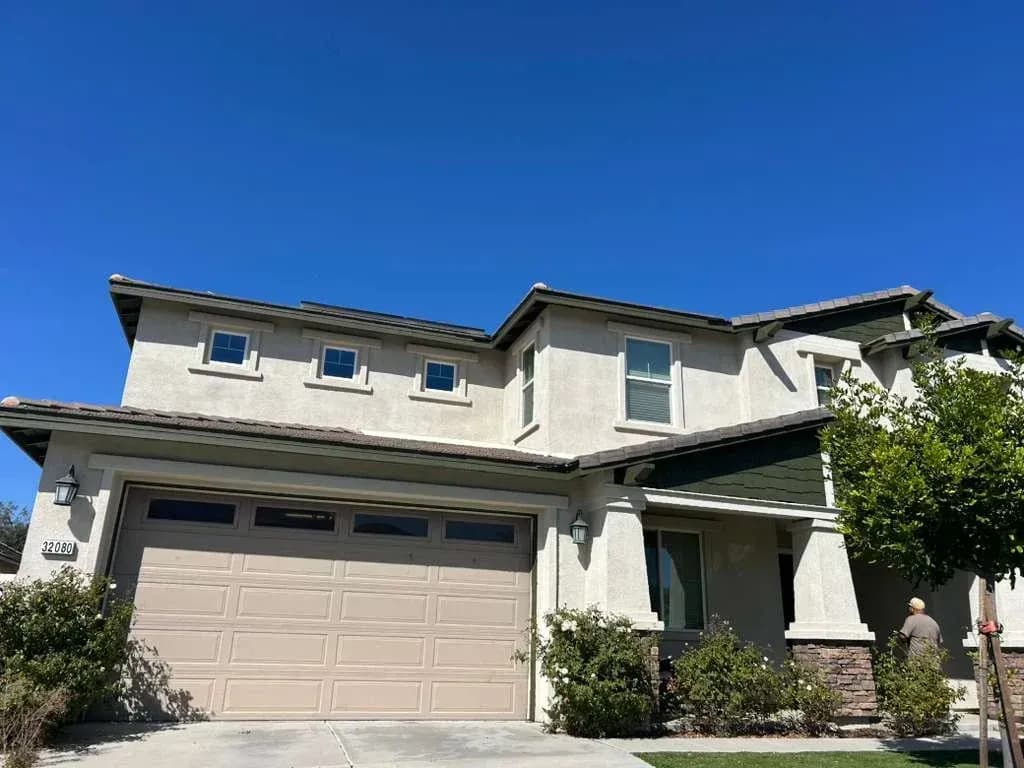
A typical single-story exterior repaint in Riverside takes 3–5 working days; a two-story home takes 5–8. Interior work runs 1–2 days per room, or roughly 4–7 working days for a whole 2,000-square-foot house. Those numbers include prep and drying time — and below is what happens on each of those days.
Here's why that matters: the painter who promises to knock out your whole exterior in a day or two isn't faster than everyone else. They're skipping something. Usually it's the dry time after the wash, the cure time on stucco repairs, or the recoat window between coats — the invisible hours that decide whether the paint lasts four years or ten.
The timelines below are the ones we actually schedule against on homes in Riverside, Corona, Eastvale, and Norco.
How many days does an exterior house painting job take?
A standard single-story exterior of about 1,500–2,200 square feet takes 3–5 working days with a three-person crew. A two-story home of 2,500–3,500 square feet takes 5–8 working days, because every elevation needs ladder or lift work and there's roughly twice the fascia, eave, and window trim.
Where you land inside each range comes down to the condition of the house. A 2015 tract home in Eastvale with sound paint and few cracks lands on the short end. A 1960s Riverside ranch home with peeling wood trim, a dozen stucco cracks, and failed caulk at every window lands on the long end — or past it. Here's how a standard single-story exterior breaks down:
| Day | What happens | Why it can't be rushed |
|---|---|---|
| Day 1 | Walkthrough with you, cover landscaping, pressure wash every elevation plus eaves and fascia | Stucco soaks up water and needs 24–48 hours to dry before patching or paint |
| Day 2 | Scrape loose paint, sand trim, cut and patch stucco cracks, re-caulk windows and trim joints | Patching compound and caulk need 4–24 hours to set before they can be coated |
| Day 3 | Mask windows, doors, fixtures, and hardscape; spot-prime bare wood, patches, and stains | Primer needs 1–4 hours before topcoat; masking alone takes most of a day |
| Day 4 | First body coat on stucco (spray and back-roll), first coat on fascia and trim | Acrylic needs about 4 hours at 77°F and 50% humidity before recoat — longer when it's cool |
| Day 5 | Second body coat, trim and door enamel, remove masking, cleanup, final walkthrough with you | Masking comes off once the coat sets, and touch-ups happen in good daylight |
On a two-story, days 2 through 5 each stretch. Expect an extra day for prep, an extra day for masking and upper-story trim, and one more for the second coat on the high walls. If you want to know what goes into each of those steps, our exterior painting page lays out the coating systems we use on stucco and wood.
How long does it take to paint the interior of a house?
Most interior rooms take 1–2 days each: one day for walls only in an average 12-by-14-foot bedroom, closer to two when the ceiling, baseboards, door casings, and door are included. A whole 2,000-square-foot home runs about 4–7 working days for a two- or three-person crew, depending on how many surfaces you're painting.
A rough guide from the jobs we run in Riverside and Corona:
- Bedroom, walls only: 1 day, including moving furniture, patching, and two coats.
- Bedroom with ceiling, trim, and door: 1.5–2 days.
- Kitchen walls (cabinets excluded): 1–1.5 days — lots of cutting in around cabinets, backsplash, and appliances.
- Great room with 16–18 foot ceilings: 2–3 days, because of scaffolding and the sheer wall area.
- Whole home, walls only: 3–5 days.
- Whole home, walls, ceilings, trim, and doors: 5–7 days.
Trim and doors are the hidden time sink. Walls go fast with a roller. Baseboards, casings, and six-panel doors get sanded, caulked, and brushed in an enamel that needs 4–6 hours between coats — or 16–24 hours for some urethane-modified enamels. A house with 30 interior doors can add two full days on its own. Our interior painting page covers the prep and products we use room by room.
What actually happens on day one of a painting project?
On day one, very little paint goes on — and that's how it should be. Day one is protection and cleaning: the crew walks the job with you, covers floors, furniture, and landscaping, and on an exterior, pressure washes every surface that's getting painted.
A typical exterior day one in Riverside looks like this:
- 7:00–7:30 a.m. — Arrival and a walkthrough with you to confirm colors, sheens, and exactly which surfaces are in scope.
- 7:30–9:00 a.m. — Cover plants and beds along the walls, shut off sprinklers, move patio furniture, protect the driveway.
- 9:00 a.m.–2:00 p.m. — Pressure wash the stucco, eaves, fascia, garage door, and trim at roughly 1,500–2,500 PSI, with a mildewcide on shaded north walls.
- Afternoon — Early scraping on wood trim that dries quickly, a marked-up list of every crack and caulk failure, and site cleanup.
On an interior, day one means furniture wrapped, floors covered, and patching started so the compound dries overnight.
Why does prep take longer than the painting itself?
Prep takes longer because the surface has to be clean, dry, sound, and sealed before paint can bond to it — and most of those steps involve waiting. Washed stucco needs 24–48 hours to dry, patches need 24 hours or more to cure, and caulk needs to skin over. The painting is fast by comparison: a three-person crew can spray and back-roll a full single-story body coat in 5–7 hours.
On a typical Riverside exterior, 55–65% of crew hours go to prep and only 35–45% to applying paint. On a neglected house, prep can run 70%.
Stucco is the big variable. Most homes in Riverside, Corona, Menifee, and Temecula are stucco, and stucco moves. Hairline cracks get sealed with an elastomeric patch or caulk that can be coated the same day or the next. Wider cracks get cut out, filled with a stucco patching compound, texture-matched, and left to cure — usually overnight, sometimes longer. Large sections of brand-new stucco need weeks before paint, or a masonry primer rated for fresh stucco.
Wood is the other one: peeling fascia gets scraped, sanded, and spot-primed, and primer needs 1–4 hours before topcoat. We walk through every step in what proper paint prep actually looks like.
How does Riverside weather affect the painting schedule?
Riverside weather affects the schedule in three ways: summer heat limits when paint can go on, winter cold and dew limit how late in the day it can go on, and Santa Ana winds can shut down spraying entirely. Rain is rarely the issue — Riverside averages about 10 inches a year, most of it between December and March.
The rules we schedule around:
- Temperature minimums. Most premium exterior acrylics are rated down to 35°F; many standard paints, primers, and caulks need 50°F. The temperature has to stay above that minimum for the paint's first several hours, not just at the moment it goes on.
- Temperature maximums. Most manufacturers put the practical ceiling around 90°F for air and surface temperature. Above that, paint dries before it can level and bond.
- Humidity and dew point. We want relative humidity under about 85%, and the wall at least 5°F warmer than the dew point. In winter, that means no exterior coats after about 2:00 p.m. — the dew that settles around sunset can streak or wash out fresh paint.
- Recoat windows. Acrylic latex is typically recoatable in about 4 hours at 77°F and 50% humidity. At 50°F with higher humidity, that stretches to 6–8 hours or the next day. Elastomeric coatings often need 12–24 hours between coats.
- Wind. Above roughly 15 mph, we stop spraying and switch to brush and roller, or move to the sheltered side of the house. Santa Ana days, with gusts of 30–50 mph through Corona and the Santa Ana River corridor, can cost a full day.
Why rushing the recoat window causes failure: the first coat forms a skin before the film underneath has released its water. Put a second coat on top too soon and you trap that moisture. The result can be blistering in the first summer, a soft film that holds dirt, or a second coat that peels away from the first in sheets. The paint wasn't defective. The schedule was.
Can painters work in the summer heat?
Yes, but not all day and not on every wall. Summer afternoons in Riverside regularly hit 95–105°F, which is above the roughly 90°F application maximum most paint manufacturers publish — and a south- or west-facing stucco wall in direct sun can run 130°F or hotter on its surface. A good crew paints in the mornings and follows the shade around the house.
A typical July schedule on a Riverside or Corona exterior:
- 6:30–11:00 a.m. — Paint the west and south elevations while they're still shaded or cool from the night.
- 11:00 a.m.–2:00 p.m. — Move to the north side and to shaded eaves and patio covers.
- 2:00–4:00 p.m. — Prep, masking, caulking, and trim work out of direct sun. No body coats on hot walls.
That split usually adds half a day to a full day to a summer exterior compared with a mild April or October week. It's worth it. Paint applied to a 120°F wall flashes dry in seconds, leaves lap marks, and bonds poorly — the failure that shows up as peeling on a west wall two summers later. The easiest exterior months in Riverside County are March through early June and late September through November.
What makes a painting job take longer than estimated?
Most painting jobs run long for one of four reasons: more surface damage than the walkthrough revealed, weather days, color changes after work has started, or a big color shift that needs an extra coat. A well-scoped estimate builds in a cushion for the first two; the last two are usually decisions made on site.
- Hidden damage. Dry rot in fascia boards, delaminating stucco, or water-damaged drywall often doesn't show until the surface is washed or scraped. Replacing a few fascia boards can add 1–2 days.
- Weather. One rain day in winter, one Santa Ana day in fall, or a run of 105°F afternoons in summer can push a 5-day exterior to 6 or 7.
- Color changes mid-project. Changing your mind after the first coat is up means repainting that area. It happens, and it's your house — but it costs a day.
- Dramatic color shifts. Going from a dark brown body to a light cream, or covering a deep red accent wall, often needs a tinted primer plus two finish coats. Add 15–25% to the time on that surface.
- Access. Locked side gates, cars that can't move out of the driveway, or a dog loose in the yard on painting day all cost hours.
A schedule is a plan, not a promise. Expect a clear day-by-day plan, a call the moment weather or hidden damage changes it, and a crew that never makes up time by shortening dry times. In Riverside and Corona, we'd rather finish a day late than have a coat fail a year early.
Want a real day-by-day schedule for your home?
We walk every Riverside and Corona home before quoting, and your written estimate lists the working days, the prep days, and the order of work — so you know what to expect each morning before the crew arrives.
Call (858) 293-7740 for a free same-day estimate, or request your quote online →
What else do Riverside homeowners ask about this?
- Can I stay in my house while it's being painted?
- Yes. During an exterior repaint you live normally — the only inconvenience is windows masked shut for 1–3 days and limited yard access. For interiors we work room by room with low-VOC paint, so most rooms are usable again the same evening or the next morning.
- How long does exterior paint need to dry before it rains?
- Most premium acrylic exterior paints need about 4–6 hours of dry weather above 50°F before light rain, and closer to 24 hours before a heavy storm. We check the hourly forecast every morning and won't put a coat on if rain is expected within 12 hours.
- When can I put furniture and pictures back after an interior paint job?
- Fresh latex paint is dry to the touch in about an hour, but wait 24 hours before pushing furniture against walls or rehanging art. The film keeps curing for 14–30 days, so avoid scrubbing or taping anything to the walls for at least the first two weeks.
- How far in advance should I book a painter in Riverside?
- Plan on 1–3 weeks for most of the year. Spring and fall are the busiest exterior seasons in Riverside and Corona, and good crews often book 3–6 weeks out during March through May and September through November.